

Rescue Drysuit vs Technical Diving Drysuit: What Is the Difference?
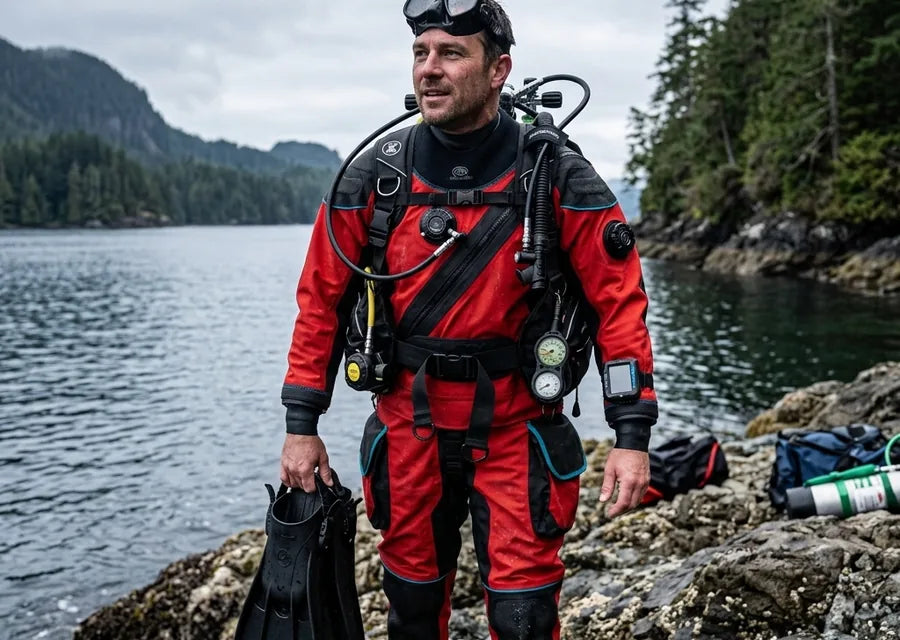
Rescue drysuits and technical diving drysuits can share waterproof construction, but they are evaluated differently. The right comparison starts with the mission: rapid response and visibility on one side, trim and underwater control on the other.
A rescue drysuit is usually compared around visibility, quick deployment, reinforced wear zones, field mobility, and team sizing. A technical diving drysuit is usually compared around underwater trim, valve access, seal and glove systems, boot or sock setup, undergarments, and training consistency.
Where rescue drysuits are different
Public safety teams often operate from shorelines, boats, docks, ice edges, rocks, and unpredictable access points. Their drysuits need to support rapid deployment, operator identification, and abrasion-heavy movement.
For rescue-focused planning, review TOB's public safety rescue drysuit guide.
Visibility matters
High-visibility panels, reflective details, and color-blocked shells can help identify operators in poor weather, low light, or moving water.
Reinforcement matters
Knees, seat, boots, lower legs, elbows, and shoulders should be evaluated for rocks, ladders, docks, and repeated field contact.
Where technical diving drysuits are different
Technical diving buyers usually focus on underwater control. The suit has to work with undergarments, wing or BCD systems, cylinders, fins, hood, gloves, and training procedures.
For dive-center planning, review TOB's technical diving drysuit guide.
Valve access matters
Inflator and exhaust valve positions should be reachable with gloves and consistent with training habits.
Mobility matters
The suit should support finning, trim, valve drills, undergarment space, and controlled movement in cold water.
Can one drysuit serve both uses?
Some buyers may compare one drysuit platform for overlapping uses, but the final configuration matters. A rescue-heavy program should not ignore visibility and reinforcement. A technical diving program should not ignore trim, valve access, and undergarment mobility.
When the same organization has multiple uses, the best RFQ explains primary use, secondary use, sizing range, operator experience, and expected replacement cycle.
Comparison checklist
- Primary mission: rescue response, technical diving, training, commercial work, or surface water.
- Visibility and reflective details needed for the operating environment.
- Valve placement, seal type, glove planning, and boot or sock configuration.
- Reinforcement zones for knees, seat, elbows, shoulders, boots, and lower legs.
- Team sizing, samples, annual quantity, and replacement plan.
FAQ
Is a rescue drysuit the same as a technical diving drysuit?
Not exactly. They may share waterproof components, but rescue buyers usually prioritize visibility and field durability, while technical diving buyers prioritize underwater control and equipment compatibility.
Which TOB resources should I use?
Use the rescue guide, the technical diving guide, and the Drysuits collection.
Can TOB help a team compare both categories?
Yes. Send TOB the use case, quantity, sizing range, configuration requirements, and target delivery timing.