Tri-laminate versus neoprene direction
Tri-laminate options often focus on shell mobility, layering, drying speed, and field serviceability. Neoprene options can appeal when buyers want a warmer, thicker feel.
Drysuit technical build
Professional drysuit buyers should compare the complete build, not just the front photo. Shell fabric, zipper position, valves, seals, boots, pockets, and reinforcement zones determine field performance.
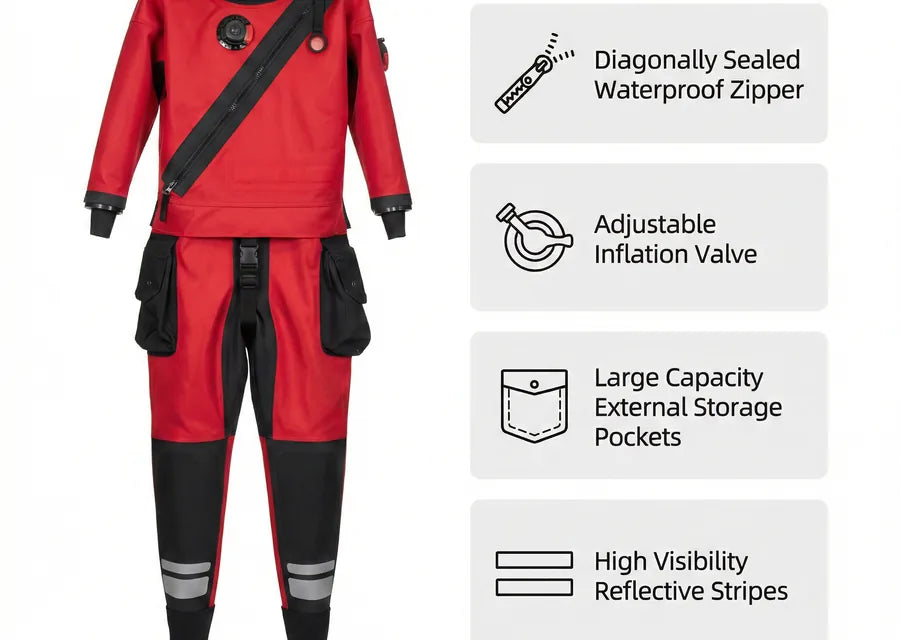
Tri-laminate and neoprene directions affect mobility, drying, insulation strategy, repair, and use case.
Zippers, valves, seals, boots, socks, and pockets should be compared as a system.
Knees, seat, elbows, shoulders, boots, and lower legs should match real operating conditions.
The same shell can perform differently depending on zipper layout, seal choice, valve placement, boots, pockets, and reinforcement. Technical comparison makes quote conversations faster and more accurate.
Tri-laminate options often focus on shell mobility, layering, drying speed, and field serviceability. Neoprene options can appeal when buyers want a warmer, thicker feel.
Diagonal, chest, or back zipper placement changes entry and movement. Latex or neoprene neck and wrist seals affect comfort and maintenance. Valve placement affects control.
Boot or sock choices, external cargo pockets, reflective panels, and reinforcement overlays should match the real mission and replacement expectations.
Open the drysuit collection after reviewing the build categories so product cards are easier to compare.
Rescue teams should prioritize visible panels, reinforced boots/lower body, pockets, and quick field-ready configuration.
Technical divers and dive centers should compare shell mobility, valves, seals, boot/sock setup, and serviceable parts.
Yes. TOB presents drysuits for cold-water diving, technical diving, rescue teams, commercial marine crews, and paddle or surface-water programs.
Confirm use case, sizing range, undergarment needs, mobility expectations, shell material, zipper placement, seals, valves, boot or sock setup, pockets, reinforcements, quantity, and delivery timing.
Yes. Buyers should send TOB their program details, target quantity, sizing spread, sample needs, color or logo requirements, and replacement planning needs before purchasing.
Start with use case, then compare shell fabric, zipper position, inflator and exhaust valves, latex or neoprene seals, boot or sock configuration, pocket layout, and reinforced wear zones.
Share your use case, expected quantity, sizing range, shell preference, seal and boot requirements, color or branding needs, sample plan, and target delivery window. TOB can help point your team toward the right drysuit path before you place an order.