

Tri-Laminate vs Neoprene Drysuits: How Professional Buyers Should Decide
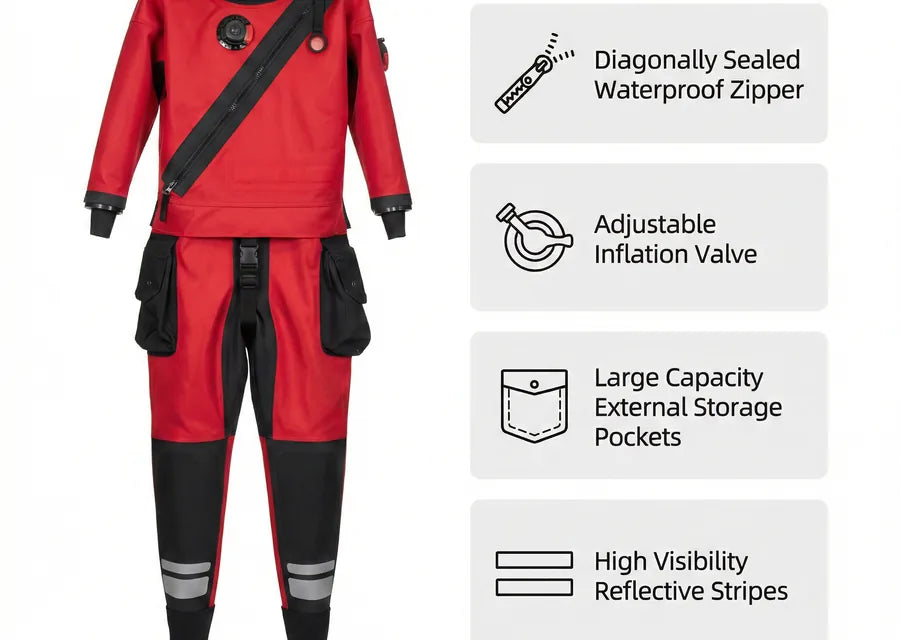
Tri-laminate and neoprene drysuits can both support cold-water work, but they solve different problems. Professional buyers should decide by mission, mobility, insulation strategy, drying time, repair expectations, and replacement planning.
Choose a tri-laminate drysuit when the program values layering flexibility, faster drying, shell mobility, and serviceability. Choose a neoprene drysuit when the buyer wants a thicker, warmer-feeling suit and accepts different drying, buoyancy, and mobility tradeoffs. The best choice depends on the team, not the keyword.
What tri-laminate drysuits are usually chosen for
A tri-laminate drysuit is a shell system. Warmth usually comes from undergarments rather than the shell itself. That gives teams flexibility across seasons and allows buyers to adjust insulation without changing the suit.
Tri-laminate shells are often compared for technical diving, rescue, commercial marine, and training programs because buyers can evaluate mobility, drying speed, field serviceability, and repeat use.
Why professional teams like tri-laminate
The shell approach can simplify layering, sample sizing, drying between shifts, and replacement planning for teams with multiple operators.
What to check
Review shell fabric, zipper placement, valve layout, seal type, boot or sock setup, pocket placement, and reinforced wear zones.
What neoprene drysuits are usually chosen for
Neoprene drysuits can appeal to buyers who want a thicker, more insulated feel from the suit body itself. They can be relevant for cold-water buyers who prioritize warmth feel and robust material direction.
The tradeoff is that neoprene can behave differently in water, may dry differently, and may require a different fit and mobility conversation. Teams should compare actual movement, layering, and task requirements before deciding.
How to make the decision for a team
The decision should be documented around use case. A rescue team may prefer high-visibility tri-laminate shells for rapid deployment and repeat sizing. A cold-water operations buyer may compare neoprene if warmth feel is central to the program. A dive center may evaluate both but prioritize valve reach, trim, undergarment strategy, and long-term service.
After deciding the material direction, compare TOB options in the Drysuits collection and use the technical build guide to review components.
Material decision checklist
- Will warmth come mainly from undergarments, the suit body, or both?
- How important are drying speed and repeated daily use?
- Does the buyer need high mobility for diving drills, paddling, climbing, or deck work?
- How will seals, boots, valves, and zippers be serviced or replaced?
- Will the team standardize one shell type for repeat ordering?
FAQ
Is tri-laminate better than neoprene for every buyer?
No. Tri-laminate and neoprene solve different problems. Buyers should compare mission, insulation, movement, drying time, repair expectations, and team replacement needs.
Which material is best for technical diving drysuits?
Many technical buyers compare tri-laminate shell systems because of layering flexibility, movement, and serviceability, but the final decision should match the diver, undergarments, and training environment.
Can TOB help compare drysuit materials?
Yes. Buyers can send TOB their use case, quantity, sizing, shell preference, and configuration requirements for a more focused recommendation.