
Custom Drysuit Sizing: Standard Size Runs vs Made-to-Measure Programs
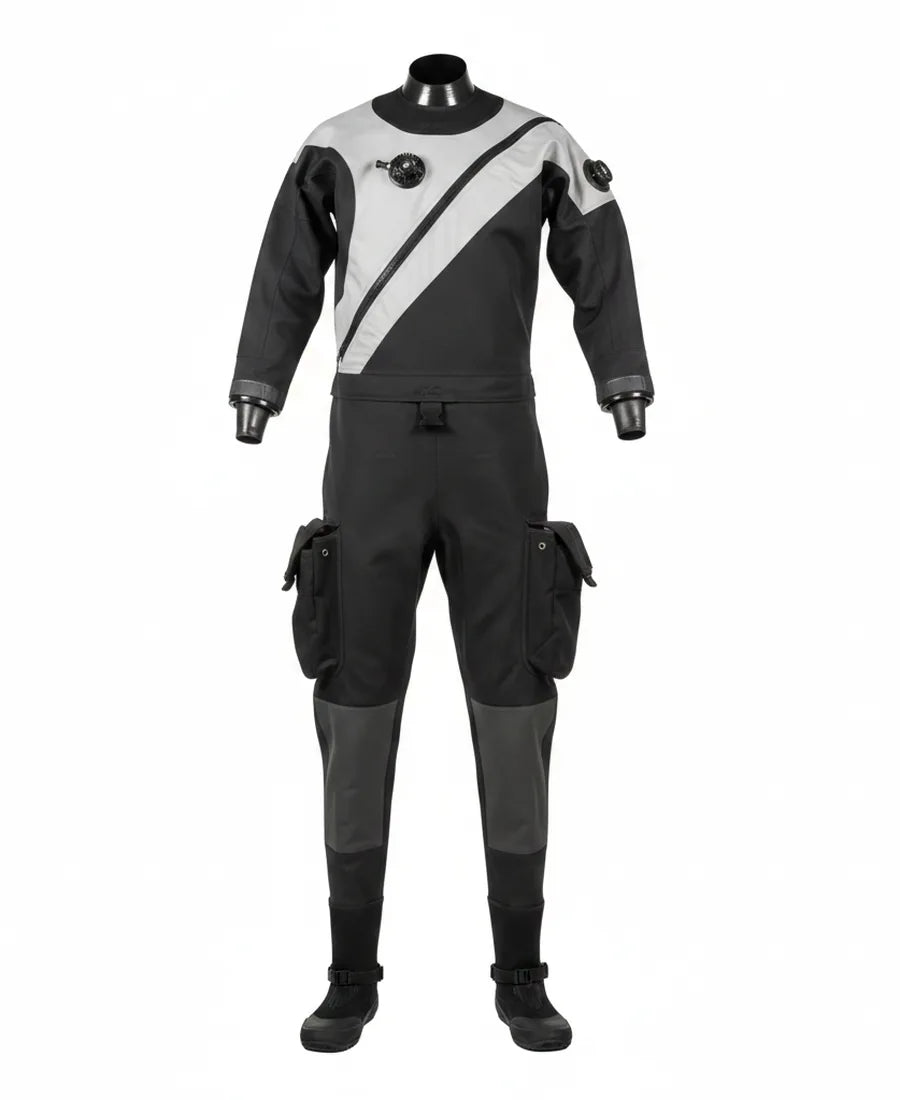
Drysuit sizing is one of the most important parts of a professional order. A suit can have the right material and features but still fail the program if the size run, undergarment plan, or mobility requirements are wrong.
Use standard size runs when the team fits predictable sizes and needs faster repeat ordering. Consider made-to-measure planning when body measurements, undergarment needs, mobility requirements, or brand-specific fit goals make standard sizing too limiting.
When standard size runs make sense
Standard size runs can work well for dive centers, rescue units, and seasonal programs when the team has predictable sizing and needs a repeatable ordering process.
The key is to test samples, document undergarment assumptions, and avoid guessing based only on casual clothing sizes.
Best for repeatable programs
Standard sizing is useful when the buyer needs recurring replacements and can keep a clear size chart for the team.
Still requires fit planning
Height, torso length, boot size, undergarment thickness, and shoulder movement still matter.
When made-to-measure planning makes sense
Made-to-measure planning becomes more useful when buyers need a premium fit path, unusual size coverage, private-label goals, color-blocked panels, or a program that must look and fit a specific way.
TOB's custom drysuit sizing guide outlines what teams should prepare before asking for a custom path.
Fit data to collect before contacting TOB
A clear sizing brief helps TOB respond faster. Include height, weight, chest, waist, hips, torso, inseam, boot size, undergarment type, mobility needs, and whether samples are required.
For team or brand programs, also include annual quantity, colors, logo location, label requirements, replacement cycles, and target delivery timing.
Custom drysuit sizing checklist
- Decide whether the order is standard size run, sample-based, made-to-measure, or mixed.
- Collect height, weight, chest, waist, hips, torso, inseam, and boot size.
- Document undergarment thickness and seasonal use.
- Record movement needs: diving drills, paddling, climbing, kneeling, or deck work.
- Prepare color, logo, label, sample, and repeat order requirements.
FAQ
Is made-to-measure always better than standard drysuit sizing?
Not always. Standard sizing can be more efficient for repeatable team programs, while made-to-measure can be better when fit, measurements, or brand requirements demand it.
What measurements matter for drysuit sizing?
Height, weight, chest, waist, hips, torso, inseam, boot size, undergarment plan, and mobility needs are important starting points.
Where should I start?
Review the custom sizing guide, then compare options in the Drysuits collection.