

Commercial Marine Drysuit Checklist for Workboats, Survey Crews, and Water Operations
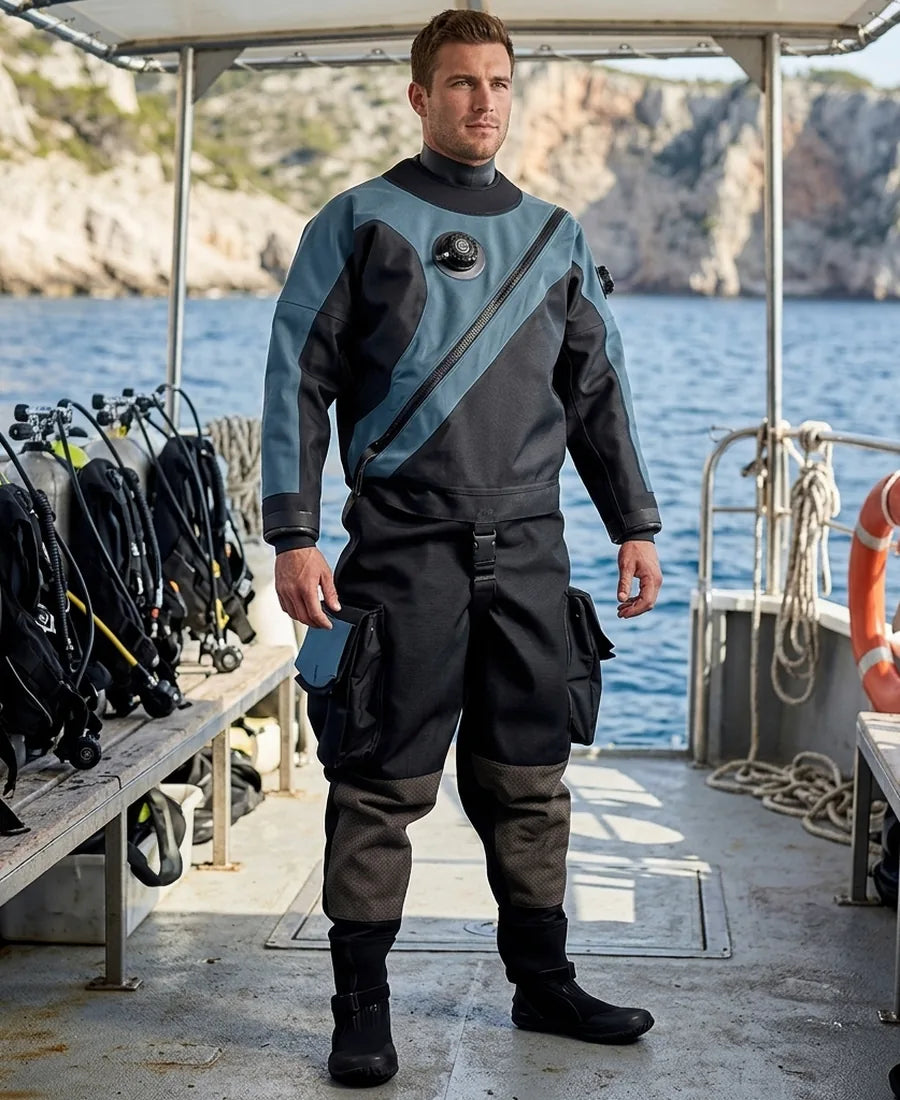
Commercial marine drysuit buyers have different priorities than recreational divers. The suit has to survive wet decks, ladders, docks, equipment handling, kneeling, spray, cold-water exposure, and rotating crew schedules.
Commercial marine crews should compare drysuits by deck mobility, boot traction, abrasion resistance, reinforced knees and seat, pocket access, zipper layout, seal durability, crew sizing, replacement timing, and sample review needs.
Deck movement should guide the drysuit choice
Workboats and survey crews move differently than divers on a calm training platform. Crew members may kneel, climb, sit, step across wet surfaces, carry equipment, or work near rails and ladders.
That means boots, knee panels, seat reinforcement, shoulder movement, and pocket placement are not minor details. They affect both safety and total replacement cost.
Boots or socks
Compare traction, ankle support, compatibility with work footwear procedures, drying, and replacement expectations.
Reinforced zones
Knees, seat, elbows, shoulders, and lower legs should match the crew's most common contact points.
Crew sizing is a procurement issue
Commercial crews may rotate personnel through the same program. A drysuit order that works for one operator does not automatically work for a crew.
Buyers should map size runs, undergarment assumptions, sample needs, and replenishment planning before they order multiple units.
Turn the checklist into a better quote
Use TOB's commercial marine drysuit guide to define the use case, then compare products in the Drysuits collection.
The quote request should explain job role, water exposure, abrasion risk, expected quantity, sizing spread, required colors, logo needs, and delivery timing.
Commercial marine drysuit buying checklist
- Describe the work: survey, workboat, dock, rescue support, training, or general water operations.
- Identify wear zones: knees, seat, elbows, shoulders, boots, lower legs, and pockets.
- Compare boot or sock setup for deck traction and replacement needs.
- Confirm zipper, seals, valves, pocket layout, and reinforcement requirements.
- Plan crew sizing, sample review, annual replacement quantity, and delivery timeline.
FAQ
What makes a drysuit suitable for commercial marine work?
Commercial buyers usually prioritize deck mobility, abrasion resistance, reinforced wear zones, boot traction, pocket layout, crew sizing, and replacement planning.
Are commercial marine drysuits different from rescue drysuits?
They can overlap, but commercial marine buyers often focus more on deck movement, work positions, boot traction, and rotating crew needs.
Where can I compare TOB commercial marine options?
Start with the commercial marine guide and the TOB Drysuits collection.